A Multi-Phase Research Programme.
RETURN was developed to understand why people delay routine dental care and to test whether a brief, dental nurse-delivered intervention could support patients to re-engage with planned dental visiting.
The research programme combined qualitative research, patient and public involvement, feasibility testing, a large randomised controlled trial with embedded health economic analysis, all conducted in real-world urgent dental care settings.
Phase 1: Intervention development and co-production
Phase 1 focused on understanding why people put off attending routine dental care and using these insights to help develop an intervention that could be delivered during urgent dental care appointments. This phase combined theory synthesis, in-depth qualitative research and extensive patient and public involvement to ensure that RETURN was grounded in lived experience and addressed the realities of urgent dental care.
Understanding patient experiences of urgent dental care
To understand why people avoid routine dental attendance, we carried out in-depth qualitative research in different urgent dental care settings across Merseyside.
This work included approximately 160 hours of observation of urgent dental visits, alongside interviews with 97 people experiencing dental problems. Some participants were interviewed once, while others took part in interviews over time.
During this research, we listened to people’s stories about their experiences of dental care, explored what made it difficult for them to attend the dentist routinely, and asked what might help them feel more comfortable returning for routine care or check-ups after an urgent visit. The findings from this work directly informed the development of the RETURN intervention and its supporting resources.
Barriers to routine dental visiting
Analysis of the qualitative data identified six barriers to routine dental visiting:
- Cost
- Time
- “I don’t think to go when I’m not in pain”
- Trust
- Embarrassment
- Anxiety
These barriers were not experienced in isolation and were often shaped by previous dental experiences, competing life pressures, and perceptions of dental services.
Developing the RETURN intervention
Insights from the wider literature combined with qualitative research were used to design a brief behavioural intervention that could be delivered by a dental nurse during an urgent dental care appointment.
The intervention was designed to support a non-judgemental, empathic discussion between the dental nurse and the patient, focusing on the patient’s own barriers to dental visiting. There is no fixed script for this conversation; instead, the emphasis is on asking open questions, listening, and supporting patients to reflect on their concerns.
The intervention comprised the following components:
- a non-judgemental, empathic discussion with a dental nurse about barriers to dental visiting
- a series of six short videos, each addressing one of the identified barriers to dental attendance
- a series of six barrier-specific booklets containing patient stories, motivational messages, and practical hints and tips for overcoming barriers
- a Next Appointment Toolkit booklet providing practical advice on making and keeping a dental appointment
- a written goal-setting and action-planning exercise facilitated by a dental nurse
These resources were designed to be used flexibly, allowing the conversation to focus on the barrier that mattered most to the patient while maintaining a consistent intervention approach.
Patient and public involvement and engagement
Alongside the qualitative research, patient and public involvement and engagement were central to Phase 1 of the RETURN programme.
Throughout the development phase, we worked with members of the public and patients to ensure that people’s voices were properly represented. This included discussions with individuals from a wide range of community groups, from young people involved in employability and welfare programmes to military veterans attending local support groups. In total, we spoke with over 300 people during this phase of the programme.
In addition to this wider engagement, a group of four patient and public representatives guided the work throughout the programme. We also worked closely with a Community Advisory Group made up of nine local people over a two-year period.
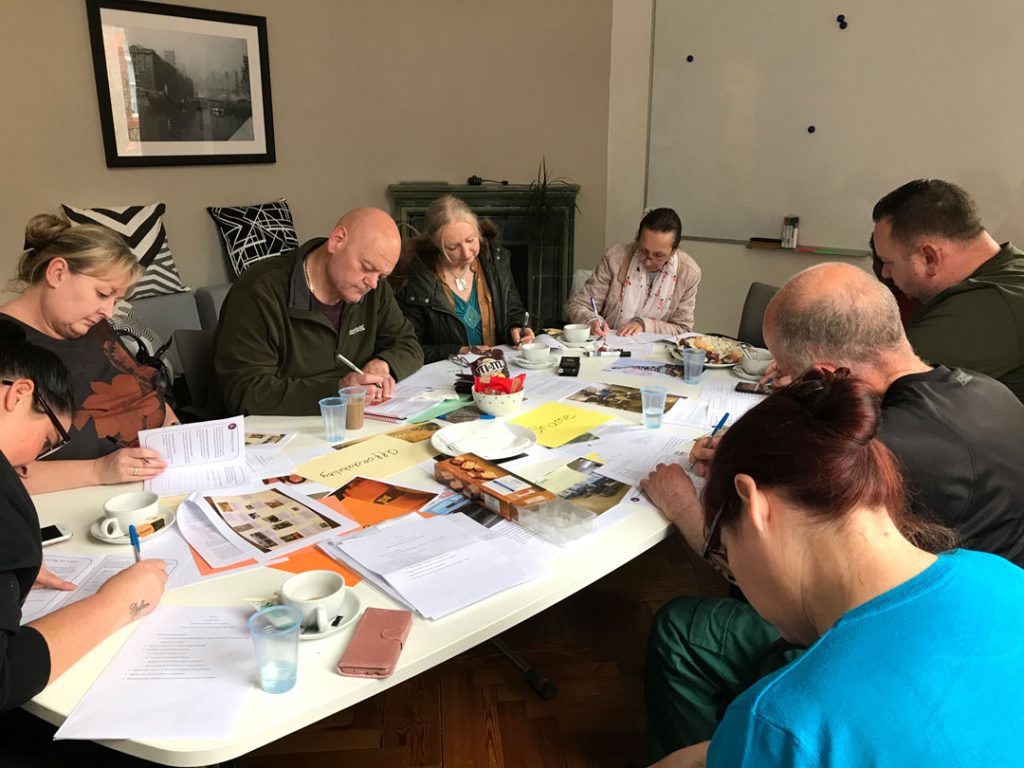
This group co-designed the intervention resources, contributed their own photographs to illustrate their experiences of dental visiting, and curated a photographic exhibition at the University of Liverpool in February 2020.
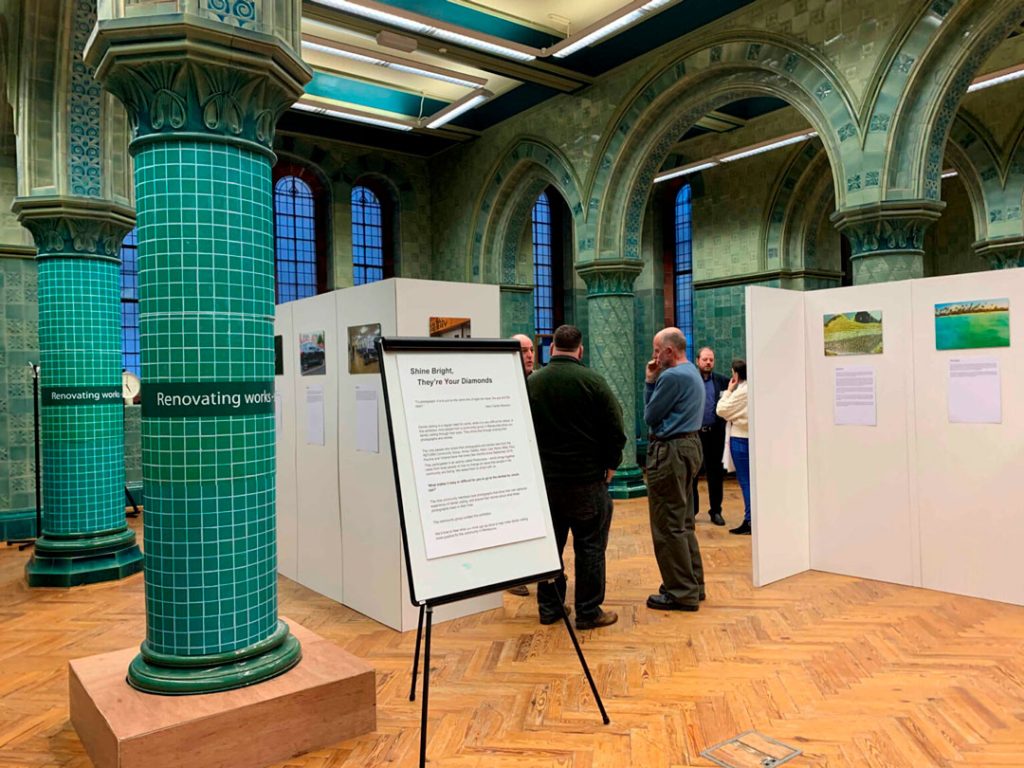
This collaborative approach helped ensure that RETURN was grounded in lived experience and responsive to the needs of people who face barriers to routine dental care.
Recognition for public involvement and engagement
The RETURN programme received recognition for its work with patients and local communities, including:
- Health and Life Sciences Public Engagement Award, 2024 – Commended
- University of Liverpool Staff Awards for Outstanding Contribution to Public Engagement, 2022 – Finalist
- Northwest Coast Research and Innovation Awards for Outstanding Contribution to Patient and Public Involvement, 2021 – Finalist
- Tate Exchange Liverpool, 2020 – Knowledge Exchange proposal selected
- Health and Life Sciences Public Engagement Award, 2019 – Winner
Refining language, tone, and content
Before finalising the intervention resources, we worked closely with members of the public to refine the language, tone, and content. This iterative process ensured that the materials were relevant, acceptable, and genuinely useful, and that they avoided judgemental or clinical language that could deter engagement.
Feedback from patients and community members informed revisions to wording, imagery, and presentation across all materials.
Outputs from Phase 1
Two peer-reviewed publications describe this phase of the work in detail:
- Publication describing the development of the RETURN intervention
- Publication describing patient and public involvement and engagement in the RETURN programme (embed)
Phase 2: Feasibility study
Following development of the RETURN intervention, we conducted a feasibility study to assess whether it was possible to deliver the intervention to patients during urgent dental care appointments, and whether the proposed trial methods were workable in practice.
Study design and setting
The feasibility study aimed to recruit 60 patients from three urgent dental care settings in Merseyside, UK:
- an in-hours urgent dental clinic
- an out-of-hours urgent dental clinic
- a dental hospital providing urgent dental care
These settings were selected to reflect the range of services through which patients access urgent dental care and to test whether RETURN could be delivered across different service models.
Study objectives
The feasibility study sought to determine:
- whether patients attending urgent dental care could be successfully recruited to the study
- whether routinely collected NHS data could be used to identify subsequent attendance at routine dental care appointments, providing an objective measure of dental visiting behaviour
- whether dental nurses could be trained to deliver the RETURN intervention as designed
- whether patients were willing to complete questionnaires to support evaluation of trial outcomes
Together, these objectives aimed to assess whether a full-scale trial was feasible and acceptable.
Recruitment and randomisation
Patients attending urgent dental care appointments were invited to take part in the study and were provided with information about the research. Those who consented to participate were randomly allocated to one of two groups:
- an intervention group, who received the RETURN intervention alongside their urgent dental care appointment
- a control group, who received usual urgent dental care only
This random allocation allowed comparison of outcomes between patients who did and did not receive the intervention.
Recruitment began in January 2020 at the in-hours urgent dental clinic, where 20 participants were successfully enrolled. Two additional sites opened later; however, recruitment across all sites was curtailed in March 2020 due to the COVID-19 pandemic.
Follow-up and data collection
Participants were followed up four months after their urgent dental care appointment. Follow-up was conducted using participants’ preferred method of contact – telephone, email, or post.
Data collection included:
- participant-reported questionnaire data
- routinely collected NHS dental data
Intervention delivery
Dental nurses were trained to deliver the RETURN intervention as part of the feasibility study. Observations of intervention delivery and feedback from both dental nurses and patients were used to assess whether the intervention could be delivered as intended within the constraints of urgent dental care appointments.
This process also provided insight into how the intervention fitted within usual workflows and where adjustments might be required.
What we learned from the feasibility study
Despite the early termination of recruitment, the feasibility study demonstrated that:
- recruitment was achievable within a short timeframe
- routinely collected NHS data could be used to track subsequent dental attendance
- dental nurses were able to deliver the intervention
- patients were willing to engage with both the intervention and follow-up data collection
Importantly, the feasibility study also highlighted areas where refinements could improve delivery and evaluation.
Refinement following feasibility testing
Learning from the feasibility study contributed to further refinement of the RETURN intervention and study procedures. This refinement was iterative and cumulative, drawing not only on feasibility data but also on learning from:
- ongoing community engagement
- a stakeholder event held in February 2020
- discussions with policymakers and dental teams
Together, these sources of feedback informed decisions about how the intervention should be delivered in practice and how intervention procedures could be strengthened ahead of full-scale evaluation.
Refinements focused on ensuring that the intervention was practical to deliver during urgent dental care appointments, aligned with clinical workflows, and supported robust and acceptable evaluation.
By the end of Phase 2, and informed by this collective learning, RETURN was considered feasible to deliver in urgent dental care settings and ready for evaluation in a randomised controlled trial.
Outputs from Phase 2
A peer-reviewed publication reports the findings of the feasibility study and the learning that informed the design of the main trial.
Publication reporting the RETURN feasibility study
Phase 3: Randomised Controlled Trial
Phase 3 involved a pragmatic randomised controlled trial to evaluate whether delivery of the RETURN intervention during urgent dental care appointments supported patients to re-engage with routine dental care (Primary outcome 1) and influenced oral health–related quality of life (Primary outcome 2), compared with usual urgent dental care alone..
The trial was embedded within real-world urgent dental care settings to assess the effectiveness of RETURN when delivered by dental nurses as part of usual urgent dental care pathways.
Trial design and setting
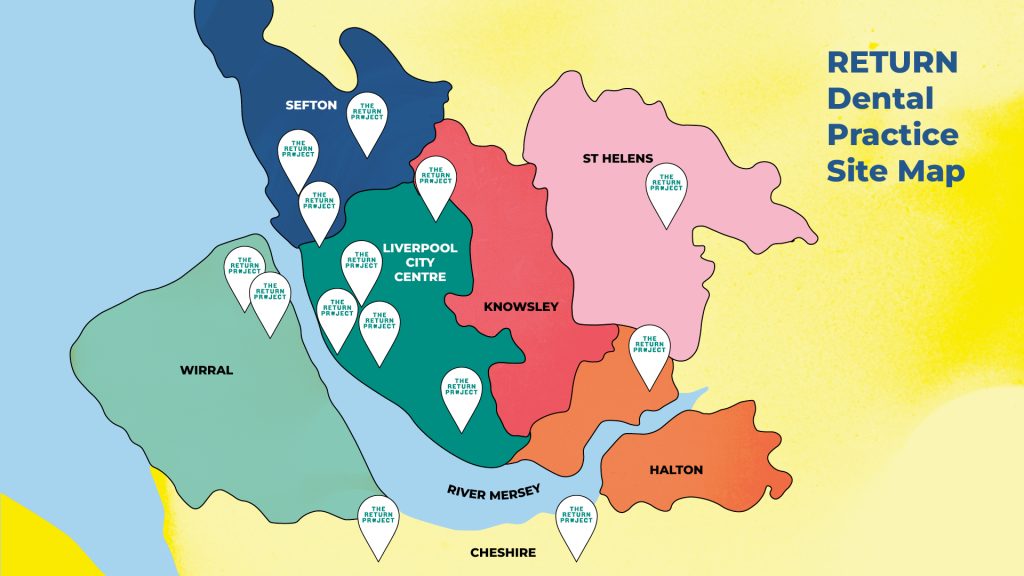
The RETURN trial commenced in August 2021, when the first participant was recruited. Recruitment took place over a 13-month period, during which 1,180 patients were enrolled from 14 urgent dental care sites.
Participating sites included:
- Liverpool Dental Hospital
- 13 dental practices providing urgent dental care during usual working hours
- 1 urgent dental clinic providing care outside of usual working hours
These sites were selected to reflect variation in urgent dental care provision.
Intervention delivery and training
A total of 14 dental nurses were trained to deliver the RETURN intervention as part of the trial. Training focused on supporting dental nurses to use the intervention resources as intended, engage patients in a non-judgemental and empathic conversation, and integrate delivery within urgent care workflows.
The intervention was delivered during urgent dental care appointments and was designed to take approximately 15 minutes.
- an intervention group, who received the RETURN intervention alongside their urgent dental care appointment
- a control group, who received usual urgent dental care only
- participant-reported questionnaire measures
- routinely collected NHS dental data
- return to routine dental care
- oral health-related quality of life
- dental anxiety
- prescriptions for painkillers or antibiotics for dental problems
- use of non-dental services for dental problems (e.g. GP or A&E attendance)
Response rates for participant-reported outcomes were:
- 6 months: 72%
- 12 months: 67%
- 18 months: 59%
Embedded qualitative study
Alongside the trial, we conducted an embedded qualitative study to explore how and why the intervention worked. Around 50 participants took part in interviews over the course of their involvement in the trial, which was up to 18 months.
This qualitative research helped us understand:
- which elements of the intervention were most effective for different people
- for whom it worked best
- how people used the RETURN intervention beyond the intervention delivery session
- how RETURN influenced dental visiting behaviour or attitudes over time
Together, these findings provide important context for interpreting the trial outcomes and understanding how RETURN can be implemented in real-world settings.
Embedded health economic evaluation
An embedded health economic evaluation was conducted alongside the randomised controlled trial to examine the costs associated with delivering the RETURN intervention and to assess changes in health outcomes over time.
The evaluation was intended to complement the effectiveness and qualitative components by providing information relevant to affordability, value, and scalability within urgent dental care services.
How the economic evaluation was conducted
The evaluation considered costs related to:
- training dental nurses to deliver RETURN
- delivery of the intervention during urgent dental care appointments
- subsequent use of dental and wider health services
Health outcomes were measured using both a generic health-related quality of life measure and an oral health-specific quality of life measure. Outcomes were assessed over 12- and 18-month follow-up periods.
The analysis adopted a health and personal social care service perspective and reflected delivery within NHS urgent dental care settings.
What the economic evaluation found
The evaluation showed that RETURN was associated with modest additional costs, primarily related to training and delivery.
Participants receiving the intervention experienced small improvements in health-related and oral health-related quality of life over follow-up. When costs and outcomes were considered jointly, the analysis indicated a positive incremental net health benefit at both 12 and 18 months, with a high probability of cost-effectiveness when assessed against standard NHS thresholds.
These findings were robust across sensitivity analyses but should be interpreted alongside the effectiveness results and within the context of constrained service availability during the trial period.
Resource use and context
Training costs represented a largely upfront investment, while ongoing delivery costs were relatively low. Once training was completed, the marginal cost of delivering the intervention to additional patients was limited, as delivery was brief and integrated into existing urgent care appointments.
Exploratory analyses suggested that cost-effectiveness was greater among participants living in more deprived areas, although subgroup findings should be interpreted with appropriate caution.
Outputs from the economic evaluation
Full methodological details and results are reported in a peer-reviewed health economics publication.
Link to health economics paper
Key Findings
RETURN was evaluated using a pragmatic randomised controlled trial with embedded qualitative and health economic analyses, delivered in real-world urgent dental care settings.
Taken together, the evidence indicates that RETURN produces small but consistently favourable effects, even when delivered during a period of significant constraint on access to routine dental care.
What the trial evidence shows
Across primary and secondary outcomes, results consistently favoured participants who received the RETURN intervention compared with usual urgent dental care alone.
In particular, the trial showed:
- increased attempts to make routine dental appointments
- small improvements in oral health–related quality of life
- reductions in dental anxiety over time
Effects on confirmed routine dental attendance were modest, and confidence intervals for the co-primary outcomes included the possibility of no effect. This reflects both the low-intensity nature of the intervention and the service context in which the trial was delivered.
How confident can we be in these findings?
The trial was conducted during and after the COVID-19 pandemic, when access to routine NHS dental care was severely limited. This reduced participants’ ability to act on intentions to attend follow-up care and constrained the effective sample size for some outcomes.
Rather than relying solely on statistical significance, findings were interpreted using an evidence-certainty approach that considers effect size, consistency, and precision. Using this approach, the overall evidence supports a small positive effect with moderate certainty. This means that further research could change the estimated size of effect, but the direction of effect is unlikely to reverse.
What patient experiences help explain
An embedded qualitative study was conducted alongside the trial to explore how patients experienced the RETURN intervention and how it influenced confidence, motivation, and behaviour over time.
This work provides important explanatory context for the quantitative findings, helping to understand why changes in behaviour and psychological outcomes were observed even when access to routine dental care was limited. Full qualitative findings will be reported in a forthcoming peer-reviewed publication.
What the economic evidence adds
The health economic evaluation showed that RETURN was associated with modest additional costs, alongside small improvements in health-related and oral health–related quality of life.
When costs and outcomes were considered together, the intervention demonstrated a high probability of cost-effectiveness. The cost profile — with largely upfront training costs and low ongoing delivery costs — suggests potential for scalability within existing urgent dental care pathways.
What this means overall
RETURN should be understood as a complementary intervention. It does not remove structural barriers to accessing routine dental care, but it supports patients to engage with care when opportunities arise and makes better use of urgent dental care encounters.
Taken together, the evidence supports RETURN as a low-burden, evidence-informed approach that can contribute to improved engagement with planned dental care, particularly when implemented alongside wider system-level reforms aimed at improving access and continuity of care.
If you are interested to read any of our peer-reviewed publications, please click here
You can explore the RETURN intervention and supporting resources directly through this website.